




Media Library

Documentary, graphic and/or audiovisual knowledge objects are offered here, offering information on various sectors and topics. Use the keyword search or search filters to access current audiovisual and documentary knowledge objects useful for your implementation.

If you have any questions or suggestions, please contact us here.

National Contingency Plan for Scirtothrips aurantii

This document outlines the measures to be taken against the Scirtothrips aurantii Faure insect, a quarantine pest, with the aim of preventing its appearance, and if it does appear, acting quickly and effectively, determining its distribution and combating it in order to try to eradicate it and at all times prevent its spread.

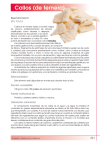
Meat and meat products: tripe

Nutritional assessment: The majority of tripe is water, followed by protein. Its fat content, especially saturated fat, is less than 3%. This last figure should be interpreted with caution. When assessing the nutritional value of a recipe based on tripe, the lipid content of the other ingredients must be taken into account.

Phytosanitary bulletin of notices and information

Pollinating insects are vitally important for the proper functioning of crops. Pollination is essential to ensuring the quantity and quality of crops and food production, directly linking wild ecosystems with agricultural production systems.

Triptych Rhynchophorus ferrugineus (Red palm weevil)

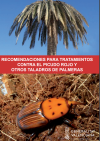
Recommendations for treatments against red palm weevil and other palm borer pests

Monitoring the olive fruit fly (Bactrocera oleae)

Field Pest Situation Report, 2024 Campaign, Week 43: October 21-October 27

Olive fly (Bactrocera oleae) treatment notice

The olive fruit fly population is beginning to increase this year, so an initial bait treatment is recommended. Once the first pitted olives appear, the next generation of adults will emerge approximately 25 days later, and a second bait treatment is required to control them.

Monitoring South African Cotonet in citrus

Delottococcus aberiae has become a key pest in the fields where it is present because it causes severe damage and is difficult to control. In addition to the damage typical of other pseudococcid species, this species causes deformation and/or reduction in fruit size. Delottococcus aberiae deforms fruit from petal fall until the fruit reaches a diameter of 2–3 cm.

Monitoring Paraleyrodes minei in Persimmon

Whiteflies are among the pests of greatest concern to the persimmon production sector in the Valencian Community. Within this group of insects, the species most commonly found on persimmons are Dialeurodes citri, Paraleyrodes minei, and Aleurothrixus floccosus.

Monitoring of Dialeurodes citri in persimmon and citrus fruits.

Whiteflies are the pests that have most concerned both the persimmon and citrus production sectors in the Valencian Community in recent years. Within this group of insects, the species most commonly found are Dialeurodes citri, Paraleyrodes minei, and Aleurothrixus floccosus.

Monitoring Pseudococcus longispinus in Persimmon

Cottony mildew is one of the pests that most concerns the persimmon production sector in the Valencian Community. They feed on the plant's sap, weakening it, and excrete large amounts of honeydew, on which saprophytic fungi develop, forming a characteristic black felt known as "sour patch." Fruits stained with sooty mold lose commercial quality.

Monitoring California red scale in citrus

The California red scale (Aonidiella aurantii) is one of the pests that most concerns the citrus sector in the Valencian Community since it depreciates the fruit's rind and, having several generations per year, reproduces exponentially throughout the campaign.

Plant pest and disease alerts: Presence of a large number of individuals of Mythimna unipuncta, a grass defoliating caterpillar.

A very voracious and polyphagous defoliating caterpillar that can affect both forage and horticultural crops, with prairies and grasslands, along with corn, being the most affected.

Webinar - How does digitalization impact pest and disease control in greenhouse crops?

How does digitalization impact pest and disease control in greenhouse crops?

Eco-regimes on farmland

Ecoregimes on croplands.

Eco-regimes in underwater cultures

Ecoregimes in underwater crops.

Reinforced conditionality

Reinforced conditionality.

National Action Plan 2018-2022 for the sustainable use of plant protection products

In preparing the National Action Plan, the experiences gained from the previous PAN 2013-2017 have been taken into account, as well as the indications of the FVO report on the evaluation of the national plans of all Member States.

Analysis of the productive structure of the dairy sheep sector in Spain 2017-2021

The aim of this study is to characterise the productive structure of the dairy sheep sector in Spain.

ECOGAN Livestock Profile User Manual - Fattening Cattle

It is a computerized system developed by the Ministry of Agriculture, Fisheries and Food in coordination with the Ministry for Ecological Transition and Demographic Challenge, which allows the registration of the Best Available Techniques (BATs) applied on the farm, as well as estimating the polluting and greenhouse gas emissions and the consumption of resources of a specific farm throughout th

ECOGAN PORCINE FAQ DOCUMENT

This document is entirely non-binding and serves solely as a working tool to facilitate a better understanding of the regulations applicable to the subject matter, as well as their harmonized application.

Download in Excel format, limit 1000 results
Register to increase your download capacity