




Media Library

Documentary, graphic and/or audiovisual knowledge objects are offered here, offering information on various sectors and topics. Use the keyword search or search filters to access current audiovisual and documentary knowledge objects useful for your implementation.

If you have any questions or suggestions, please contact us here.

Dossier of supra-autonomous innovation projects

Inventory of innovative projects implemented by supra-regional operational groups of the European Innovation Partnership for agricultural productivity and sustainability of the National Rural Development Programme (PNDR) 2014-2022, submeasure 16.2.

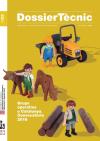
Operational Groups in Catalonia. Call for 2018

"Technical Dossier No. 123: “Operational groups in Catalonia. Call 2018” is dedicated to the Operational Groups developed within the framework of the CAP Strategic Plan (PEPAC 2023-2027), and taking into account the Agricultural Knowledge and Innovation Systems, also known as AKIS (Agricultural Knowledge and Innovation System).

Considerations on vineyard nutrition and fertilization

From a nutritional standpoint, the grapevine is characterized by a regular rate of nutrient absorption throughout its growth cycle and relatively moderate mineral requirements. Inadequate fertilization strategies lead to undesirable nutritional imbalances with negative repercussions for quality, farm profitability, and the environment.

Grups operatius a Catalunya. Call 2018 (Catalan)

The Technical Dossier no. 123: “Grups operatius a Catalunya. Call 2018” is dedicated to the Groups Operatius developed within the framework of the CAP Strategic Plan (PEPAC 2023-2027), and includes the Agricultural Knowledge and Innovation Systems, also linked to AKIS (Agricultural Knowledge and Innovation System).

Sinapis flexuosa, a mustard with high glucosinolate content and an alternative to Sinapis alba for biofumigation.

Sinapis flexuosa is a native cruciferous mustard species found in southeastern Spain, in the provinces of Almería, Murcia, and Jaén, and occasionally naturalized in other provinces further north (Barcelona, Coruña, and Pontevedra).

Exploratory analysis of irrigation and fertilization management practices in Andalusian agriculture

Results of an exploratory analysis conducted in 2022, using information collected from surveys of farmers attending courses and conferences organized by IFAPA, on the current status of agricultural practices for irrigation management and nitrogen fertilization.

Fertilization practices in wheat under direct sowing: alternatives to the use of urea

Results of a research project that studied different alternative fertilization methodologies using urea. Among these, the use of nitrification inhibitors and urease stands out. The results were presented in terms of agronomic benefits (harvest, N in grain, etc.) and environmental benefits (reduction of nitrate leaching and N02 emissions).

Optimizing Irrigation and Fertilization in Sunflower Cultivation

To further our understanding of the interaction between water and fertilizer requirements in sunflower cultivation, a three-year experiment was conducted testing different irrigation volumes, different fertilization strategies, and their potential interactions on seed yield, oil content, and other yield components. This document presents the results of the experiment.

Dynamic Programming of Fertigation in Lettuce Using Simulation Models

The EU-Rotate_N and CropSyst simulation models were evaluated for outdoor lettuce cultivation. The performance of the models was assessed in relation to: i) dry matter production, ii) crop N uptake, iii) commercial production, iv) soil water content, and v) soil mineral N content. Data from three years with different nitrogen (N) doses were used.

Strategies for sustainable nitrogen fertilization

Diffuse nitrate pollution from agricultural activities has been identified as one of the main causes of the poor condition of both surface and inland water bodies, as well as groundwater.

Efficiency of Nitrogen Fertilization of a Raspberry Crop in Huelva

This paper presents the results of a fertigation trial conducted on a remontant raspberry crop in the province of Huelva. The effect of different nitrogen (N) doses on yield was evaluated, and plant and fruit nitrogen uptake was characterized. The nitrogen applied in a two-harvest campaign, including that present in the irrigation water and top dressing, ranged between 213 and 346 FU ha-1.

Organic Certification of Chickpeas Using Stable Nitrogen Isotopes

This document presents the results obtained for the differentiation, by isotope ratio mass spectrometry (IRMS), of chickpeas of the Fardón variety, grown in two different soils and with different types of fertilizer, some suitable for conventional cultivation and others for organic cultivation.

Effect of Electrical Conductivity of Irrigation Water and Carbon Fertilization on the Conservation of Raf Tomato

This document presents the results of a study that evaluates the effect of the electrical conductivity (EC) of the nutrient solution and carbon dioxide fertilization through the addition of CO2 to the greenhouse on the quality and shelf life of Raf tomato (cv. Delizia).

Development of Sinapis alba subsp. Mairei and glucosinolate production with different sowing rates and fertilizer types

This work evaluates different sowing doses of Sinapis alba and the appropriate fertilization strategies to maximize plant development and glucosinolate content of this species, so that it is effective when used as a plant cover for biofumigation.

Correction of iron chlorosis in olive groves using chelates

This paper shows the results of a study in which, for 4 years, from 2003 to 2006, the productive response of different types of olive groves to the application of iron chelates or Fe EDDHA was evaluated.

Foliar fertilization in olive groves. Correcting nutritional deficiencies

This document compiles updated information to correctly perform foliar fertilization in olive groves.

Strategies for fertilizing a Sinapis alba subsp. Mairei cover crop for biofumigation in olive groves

The objective was to evaluate three fertilization strategies for Sinapis alba (mustard) in a young olive grove and a traditional one. N requirements are estimated at 80–85 kg/ha for the formation of a good canopy and biomass. S is also necessary for the formation of glucosinolates.

Biostimulants in Corn

The objective of this study is to evaluate the effect of a biostimulant product, Green Factor®, on grain yield in corn crops. The document presents the results of a trial conducted during the 2016-17 crop season. This product is marketed as a substitute for organic nitrogen in crops.

Natural methods of sexual stimulation in sheep, as an alternative to the use of hormones

The objective of this study was to evaluate the effects of exposure to artificial long days at an early age, or rearing in the presence of sexually activated adult rams, on sexual activity, testicular development, and testosterone concentrations in spring in autumn-born Merino sheep.

Organic Amendment in Agroindustrial Crop Systems

This document is a guide to Operation 10.1.5. Sustainable Agroindustrial Crop Systems, of the Andalusian PRD 1014-2020. This document aims to provide information on the agronomic and environmental benefits of this practice, as well as offer a series of technical recommendations to follow for its proper implementation.