




Media Library

Documentary, graphic and/or audiovisual knowledge objects are offered here, offering information on various sectors and topics. Use the keyword search or search filters to access current audiovisual and documentary knowledge objects useful for your implementation.

If you have any questions or suggestions, please contact us here.

Climate Change and Carbon Footprint Reduction

Current challenges focus on promoting new, more environmentally sustainable strategies. Technicians and researchers agree on the need to increase carbon sequestration in three complementary areas: forestry systems, crops and agroforestry systems. New, more sustainable land use management tools are being developed through the Operational Groups and Innovative Projects.

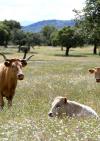
Code of good environmental practices for beef cattle

Code of good environmental practices for beef cattle to help the sector reduce its emissions

Impact of Different Dehesa Conservation Actions on the Sector and Society of Andalusia

Results of the evaluation carried out on the impact of the actions carried out by the LIFE+ Biodehesa Project in Andalusia.

Agricultural Operation Logbook

The Digital Farm Logbook (CUE) is one of the tools aimed at agricultural professionals to optimize their production and simplify farm management. It involves switching from the traditional paper-based farm logbook to a digital format that allows farmers to make better use of the information they generate and transmit it to government agencies electronically.

Sustainable agriculture and eco-regimes: practices that care for the countryside and receive European support

Did you know you can protect the environment and receive direct aid? Eco-schemes are voluntary practices that improve environmental and climate performance in agriculture. In this video from the CAP Network, we show you two real-world examples of good practices applicable to eco-schemes.

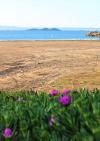
Plant conservation structures and nutrient retention surfaces of Law 3/2020 of the Mar Menor

This book presents the results of several demonstration plots implemented at the CIFEA research center in Torre-Pacheco. These plots focused on two types of vegetation: Vegetative Barrier and Conservation Structures (VBS) and Nutrient Retention Surfaces (5%), both of which are mandated by Law 3/2020 for the recovery and protection of the Mar Menor lagoon.

Report on good environmental practices in rural areas

Agriculture and the environment can not only coexist, but are the best allies for ensuring each other's future.

Prospective report on the state of agrivoltaic energy

Climate change and its negative consequences for our planet and socioeconomic systems are now recognized by the scientific community and society at large [1]. To mitigate this situation, it is crucial to reduce greenhouse gas emissions resulting from human activity, as they are the primary cause of global warming.

Savia Rural, The magazine of the CAP Network

The PAC Network Magazine

Extensive livestock farming and eco-regimes: caring for the countryside with European aid

How can extensive livestock farming protect the environment and access European subsidies? Eco-schemes are voluntary practices that improve environmental and climate performance in the countryside. In this video from the CAP Network, we show you two real-world examples applicable to extensive livestock farming.

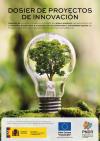
Dossier of supra-autonomous innovation projects

Inventory of innovative projects implemented by supra-regional operational groups of the European Innovation Partnership for agricultural productivity and sustainability of the National Rural Development Programme (PNDR) 2014-2022, submeasure 16.2.

The voice of water

Key players in the agricultural sector working towards more efficient water use in defense of sustainability.

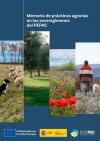
Report on agricultural practices in the ecoregimes of the PEPAC

Two years into the implementation of the 2023-2027 PEPAC (Special Plan for Agricultural and Food Policy), the measures promoting climate, the environment, and animal welfare, known as eco-schemes, appear to be consolidating the adoption of these schemes, one of the key regulatory innovations of this period.

Sprouting, survival, and initial growth of eight walnut clones for the production of quality wood on agricultural land in the Vega de Granada.

The budding, survival, and initial growth of eight walnut clones selected for their forestry suitability were evaluated. Planting was carried out in March 2014 using a randomized complete block design. All clones tested, except one, had budding percentages above 50%. We can classify clones as early-budding and late-budding. The duration of the budding period varies depending on the clone.

Operational Groups in Catalonia. Call for 2018

"Technical Dossier No. 123: “Operational groups in Catalonia. Call 2018” is dedicated to the Operational Groups developed within the framework of the CAP Strategic Plan (PEPAC 2023-2027), and taking into account the Agricultural Knowledge and Innovation Systems, also known as AKIS (Agricultural Knowledge and Innovation System).

How much is Andalusian society willing to pay for agricultural landscapes and why? The case of the dehesa and olive groves on slopes

In agricultural landscapes, their aesthetic, ecological, and cultural dimensions are clearly integrated, creating a link between the cultural ecosystem services they provide to society and other ecosystem services, including biodiversity preservation.

Advances in Root Rot Control in the Dehesa: Biofumigation

Root rot caused by Phytophthora cinnamomi in Quercus trees is responsible for the death of holm oaks and cork oaks in dehesas. Biofumigation using green burying of some Brassicas may be another tool for integrated disease control.

Root rot: Description and control applied to dehesa ecosystems

Root rot caused by the pathogen Phytophthora cinnamomi Rands. has been identified as one of the most damaging and lethal diseases affecting Quercus trees worldwide.

The Production of Holm Oak Acorns in the Dehesa

The acorn plays a fundamental role in the dehesa (pasture) because it is obtained in a season when there are few resources available in the countryside, and its high energy value makes it highly valued for fattening and maintaining livestock and game.

Soil management against erosion in Dehesa

This manual is intended as a reference tool for identifying erosion risks in pastureland farms and recommends actions to address them where possible. Specifically, the manual outlines good soil management practices and devotes a chapter to the control of gullies, the appearance of which is a symptom of severe erosion.