




Media Library

Documentary, graphic and/or audiovisual knowledge objects are offered here, offering information on various sectors and topics. Use the keyword search or search filters to access current audiovisual and documentary knowledge objects useful for your implementation.

If you have any questions or suggestions, please contact us here.

National Contingency Plan for Eotetranychus lewisi

This document sets out the measures to be taken against Eotetranychus lewisi, a regulated harmful organism, with the aim of preventing its emergence and, if it does, acting quickly and effectively, determining its distribution and implementing eradication measures. Eotetranychus lewisi is a mite of the Tetranychidae family.

Triptych Rhynchophorus ferrugineus (Red palm weevil)

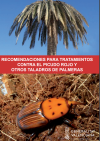
Recommendations for treatments against red palm weevil and other palm borer pests

Monitoring Paraleyrodes minei in Persimmon

Whiteflies are among the pests of greatest concern to the persimmon production sector in the Valencian Community. Within this group of insects, the species most commonly found on persimmons are Dialeurodes citri, Paraleyrodes minei, and Aleurothrixus floccosus.

Monitoring of Dialeurodes citri in persimmon and citrus fruits.

Whiteflies are the pests that have most concerned both the persimmon and citrus production sectors in the Valencian Community in recent years. Within this group of insects, the species most commonly found are Dialeurodes citri, Paraleyrodes minei, and Aleurothrixus floccosus.

Monitoring Pseudococcus longispinus in Persimmon

Cottony mildew is one of the pests that most concerns the persimmon production sector in the Valencian Community. They feed on the plant's sap, weakening it, and excrete large amounts of honeydew, on which saprophytic fungi develop, forming a characteristic black felt known as "sour patch." Fruits stained with sooty mold lose commercial quality.

Pest and disease management strategies in persimmon

Pest and disease management strategies in persimmon

Workshop on Kiwi Cultivation

Workshop on Kiwi Cultivation

Biological control in persimmon: Cajamar and Agrobío opt for combined strategies for sustainable cultivation

Hedges, ground cover, and the release of beneficial insects become key allies in reducing the use of chemicals and protecting biodiversity in this crop.

Agri-food research and innovation systems worldwide

Cajamar celebrates 50 years of commitment to agricultural research by publishing a work that transcends mere commemoration to become a key reference tool.

Online workshop: Advanced advisory skills for agricultural advisors in the field of technological solutions for digital agriculture

In this online workshop, organized by QuantiFarm in collaboration with EUFRAS, on November 28, 2024, farmers, rural consultants and other stakeholders had the opportunity to delve deeper into:

The effect of different irrigation allocations on avocado cultivation. 2016/2017 season

Results of the 2016/17 campaign of irrigation trials on commercial avocado farms on the Andalusian coast.

Main Root Rots of Avocado on the Andalusian Coast

Root rot, caused by Phytophthora cinnamomi Rands, and white root rot, caused by Rosellinia necatrix Prill, are among the most important diseases affecting avocados. This guide aims to provide practical information for identifying them in the field and provide a key set of general recommendations for their prevention and/or treatment.

Integrated Management of Mango White Scale

The white mealybug (Aulacaspis tubercularis) is the most important pest of mangoes in southern Spain and one of the most damaging worldwide. The basis for its integrated management is proposed here. A description of the pest is provided, along with data on its biology, symptoms, and damage.

Sustainable chemical control of the mango white scale (Aulacaspis tubercularis)

The white mealybug is a key pest in mango crops in Andalusia as it produces significant

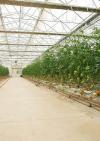
Protected Cultivation of Six Varieties of Sweet Cucumber (Solanum muricatum)

In the search for alternative crops to conventional greenhouse-grown vegetables, this study evaluated the greenhouse production of six cultivars of sweet cucumber (Solanum muricatum). The trials were conducted in 2015. All cultivars developed successfully, achieving high yields, with the Valencia cultivar standing out as the most productive and earliest.

Sustainable irrigation management in avocado cultivation

This paper aims to provide some key insights into improving irrigation management in Andalusian avocado cultivation. Irrigation and proper water resource management are critical factors for maintaining crop viability and long-term sustainability in the face of current water scarcity and future climate change forecasts.

Visual Guide to Avocado Pests and Their Natural Enemies

This document briefly describes the characteristics of the four most important pest species of avocado crops in our area (two tetranychid mites and two mealybugs) and their main natural enemies (predatory mites, neuropterans, and coccinellids). Photographs accompany the description for quick identification.

Mango Powdery Mildew

Powdery mildew, along with bacterial necrosis and flower malformation, is one of the most damaging and common diseases found in Andalusian mango plantations. The symptoms are obvious and easily recognized, but if not properly controlled, they can lead to yield losses and, in some cases, affect crop quality.

Feasibility of sustained deficit irrigation in mango cultivation

Mango is one of the most prized exotic fruits worldwide. In Andalusia, it is cultivated commercially in the provinces of Granada and Málaga thanks to the area's characteristic microclimate. Deficit irrigation is an optimization strategy whereby crops are subjected to a controlled level of water stress, resulting from a reduction in water input based on the crop's net demand.

Rosellinia necatrix Infection Process in Avocado

Description of the infection process and control measures for Rosellinia necatrix, the causative agent of white root rot in avocado crops.